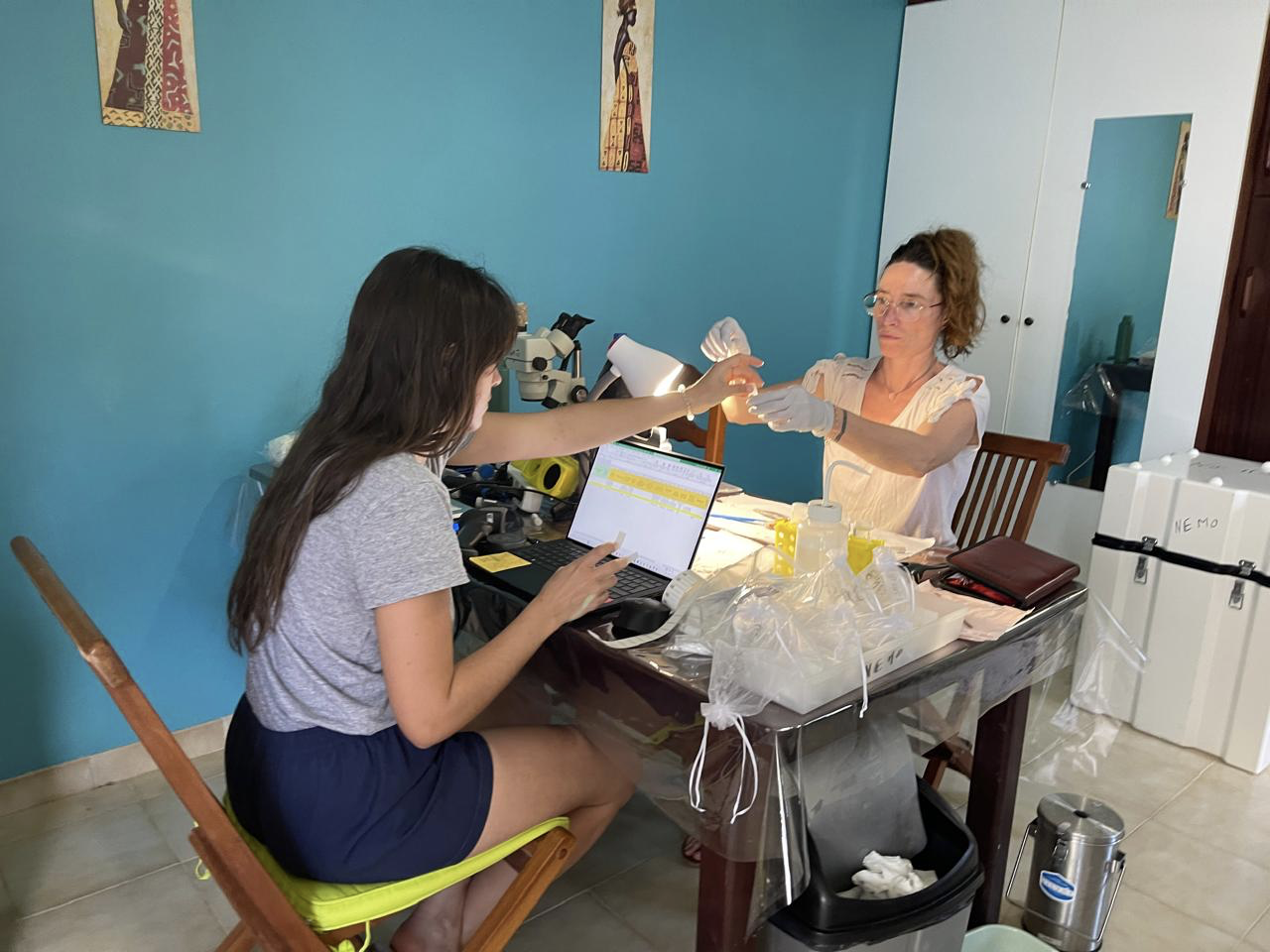
From January 19 to 30, 2026, ATLASea traveled to Martinique for a special sponge sampling mission! On this occasion, we interviewed Thierry Pérez, a researcher specializing in marine ecology and a member of the program who led this mission.
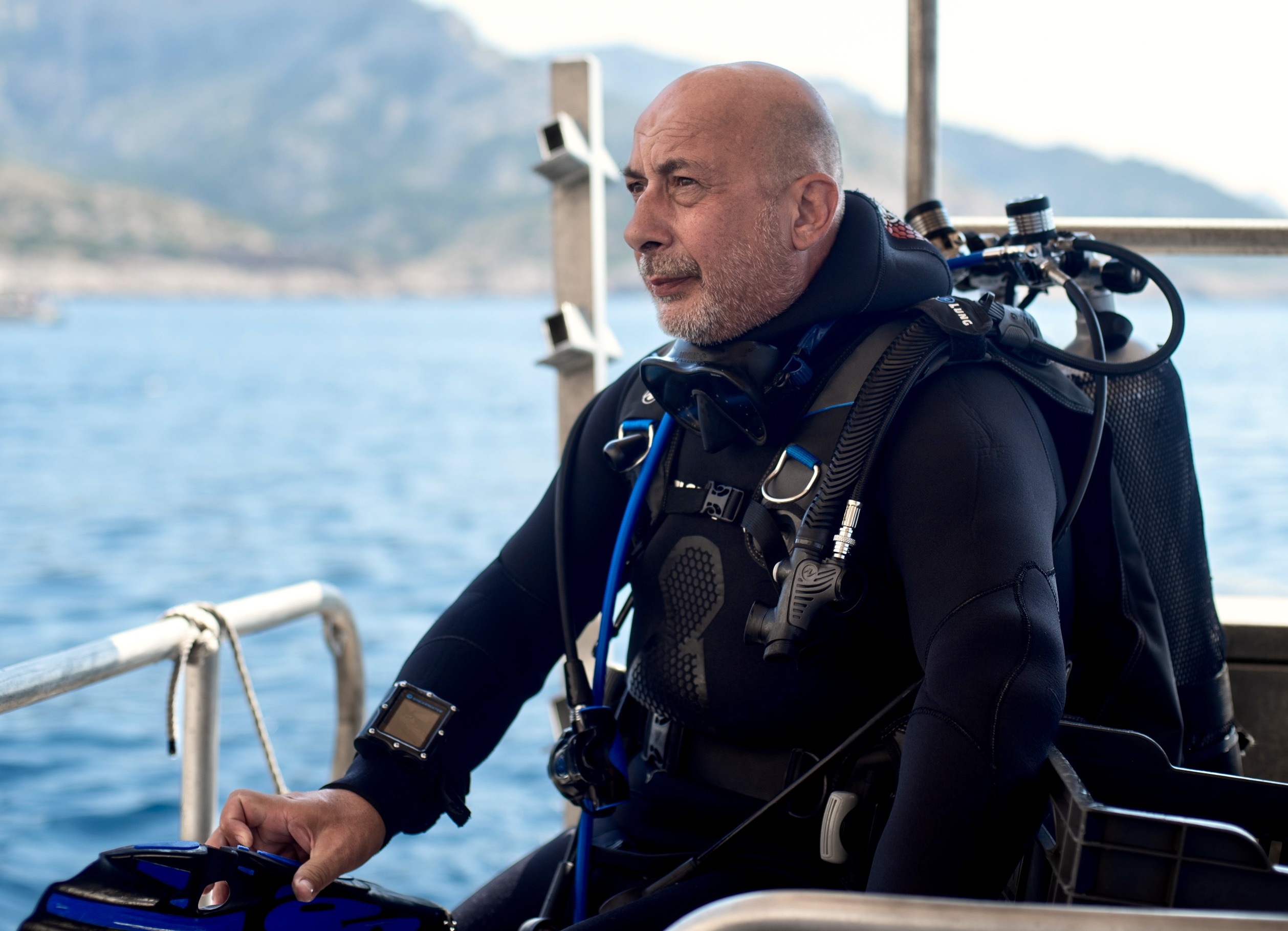
Thierry Pérez © Marie Origas
What makes Martinique a particularly interesting site for sponge collection?
From the very beginning of the ATLASea program, I proposed Martinique as a key site for targeted sponge sampling, as sponges are priority model organisms in the search for natural compounds with potential applications. Martinique truly stands out within the Caribbean Sea. Every sponge specialist I have brought into the field there agrees: its biodiversity is exceptional, incomparable to what we observe elsewhere in the French Antilles.
I have been working in Martinique for 15 years, leading several sampling campaigns, including a major oceanographic expedition in 2015 (PACOTILLES), which surveyed the Lesser Antilles and enabled us to compare biodiversity across multiple islands, including Guadeloupe and Saint Martin. I also organized a summer school there dedicated to sponge research.
In 2017, I published the first inventory of Martinique’s sponge fauna, identifying nearly 200 species. Since then, together with my collaborators and students, we have described nearly 20 new taxa from the island. This solid knowledge base made Martinique an ideal source of sponge specimens for ATLASea, especially given that other sequencing initiatives have largely overlooked the Caribbean.
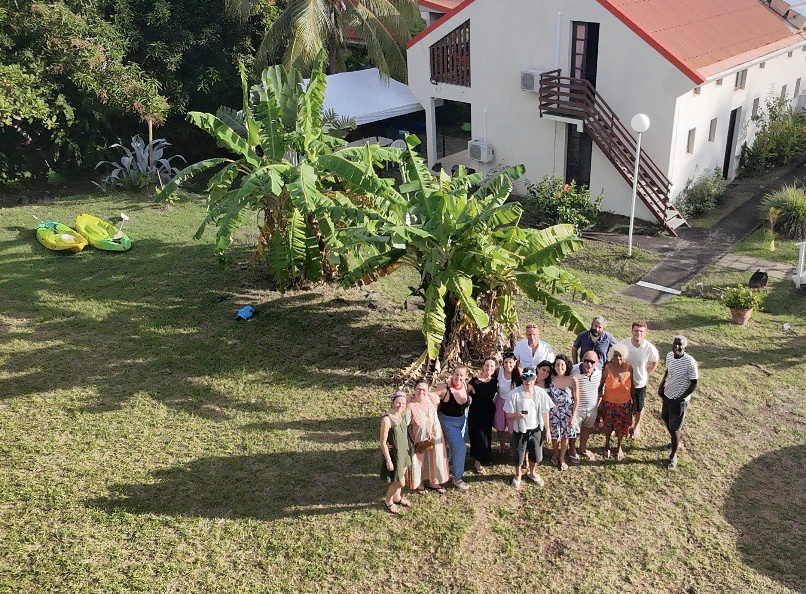
The mission team, almost complete, on-site at the Motel La Sucrerie, where the laboratories were set up across two studio rooms: Thierry Pérez, Marie Grenier, Sacha Molinari, Charlotte Simmler, Clément Cabioch, Titouan Biré, Margaux Ledissez, Morgane Monteil (CNRS-AMU IMBE), Luc Rangon (IRD Martinique – IMBE), Karine Labadie, Julie Poulain (CEA Genoscope), Cristina Diaz (Musée de Margharita, Venezuela), Guillaume Tollu and several other colleagues (Impact Mer, La Martinique) + Bruno Garel, Philippe Thélamon and several other colleagues (Parc Naturel Marin de la Martinique). © Titouan Biré
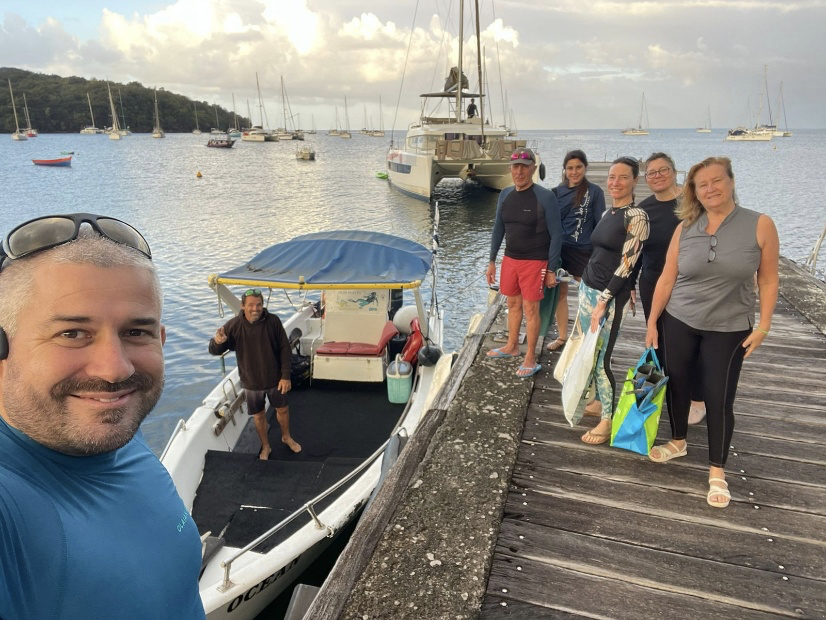
Part of the team setting out for the Génipa Mangrove in the Bay of Fort-de-France, under the guidance of Guillaume Tollu and Cristina Diaz.© Guillaume Tollu
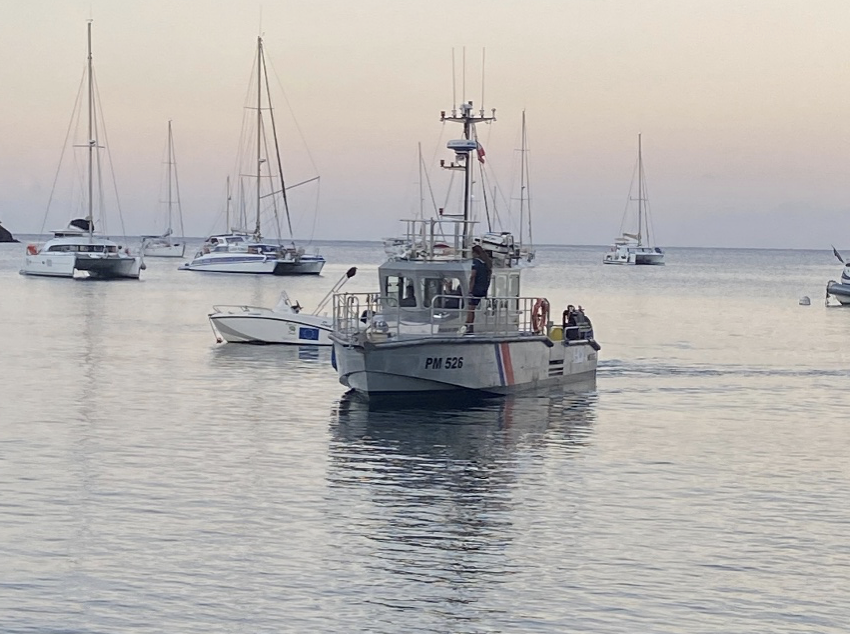
The boat from the Marine Natural Park, assigned to the mission for six consecutive days. For each dive, two park officers accompanied the ATLASea team. © Thierry Pérez
Which specific areas were sampled?
In Martinique, the area I know best lies between Anses d’Arlet and Diamond Bay, so that’s where we focused our efforts: sampling sites where I had previously worked.
In Martinique, coral reefs, as people typically imagine them, don’t really exist. Instead, corals and sponges grow together across boulder fields, ancient reef structures, and along rocky drop-offs. We also explored several underwater caves, particularly to find species I had previously described there.
We conducted additional sampling in two mangroves, one in the Bay of Fort-de-France and another one on the Atlantic coast, where sponges had already been studied in collaboration with my colleagues at Impact Mer and Cristina Diaz. This strategy allowed us to target our sampling as efficiently as possible. Even so, we still collected a significant number of new and unexpected specimens.
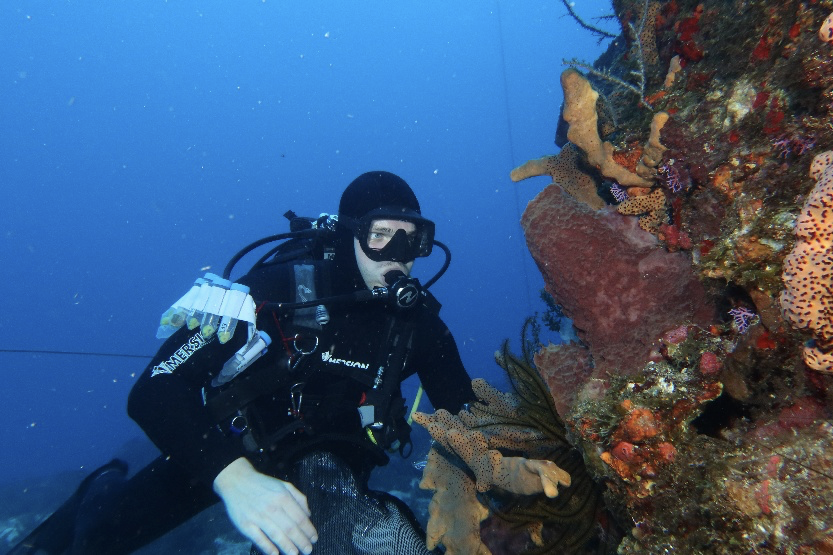
Clément Cabioch, a PhD student, was one of the two ATLASea divers. Collecting an Irciniidae sponge at Rocher du Diamant. © Thierry Pérez
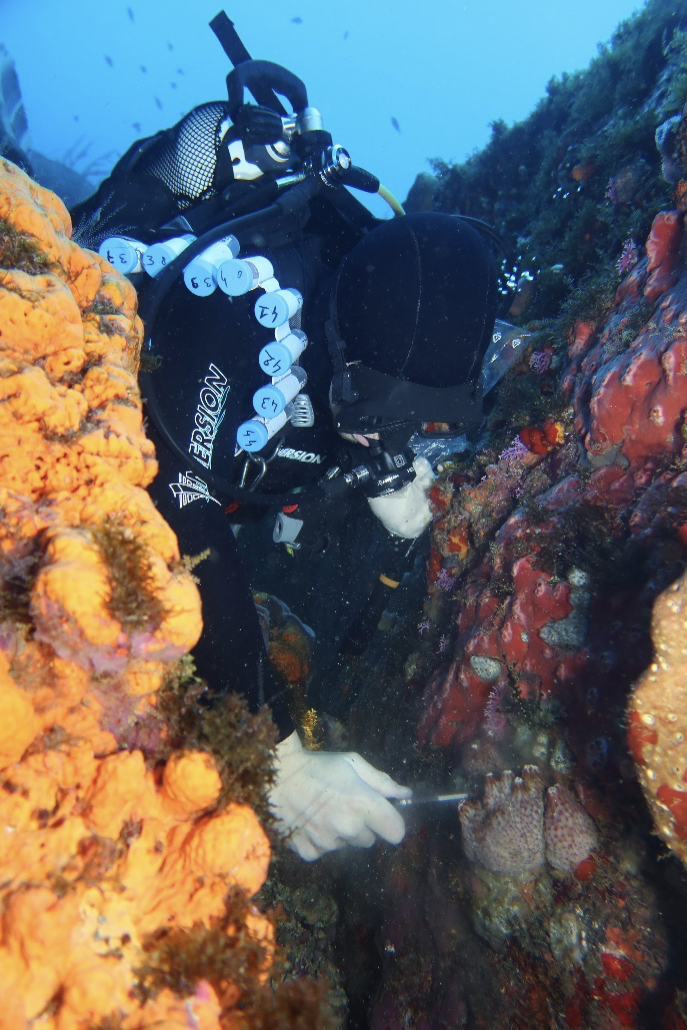
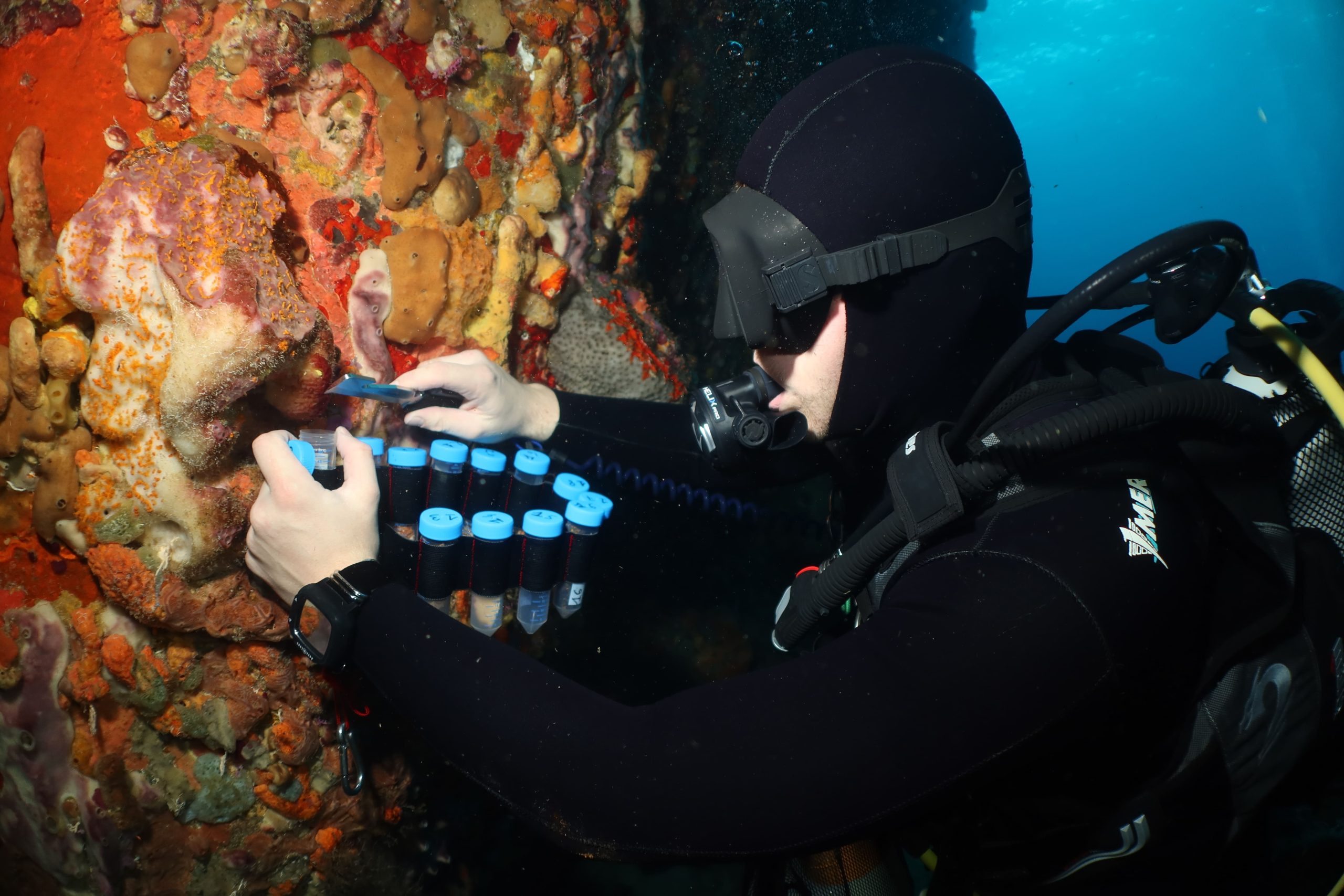
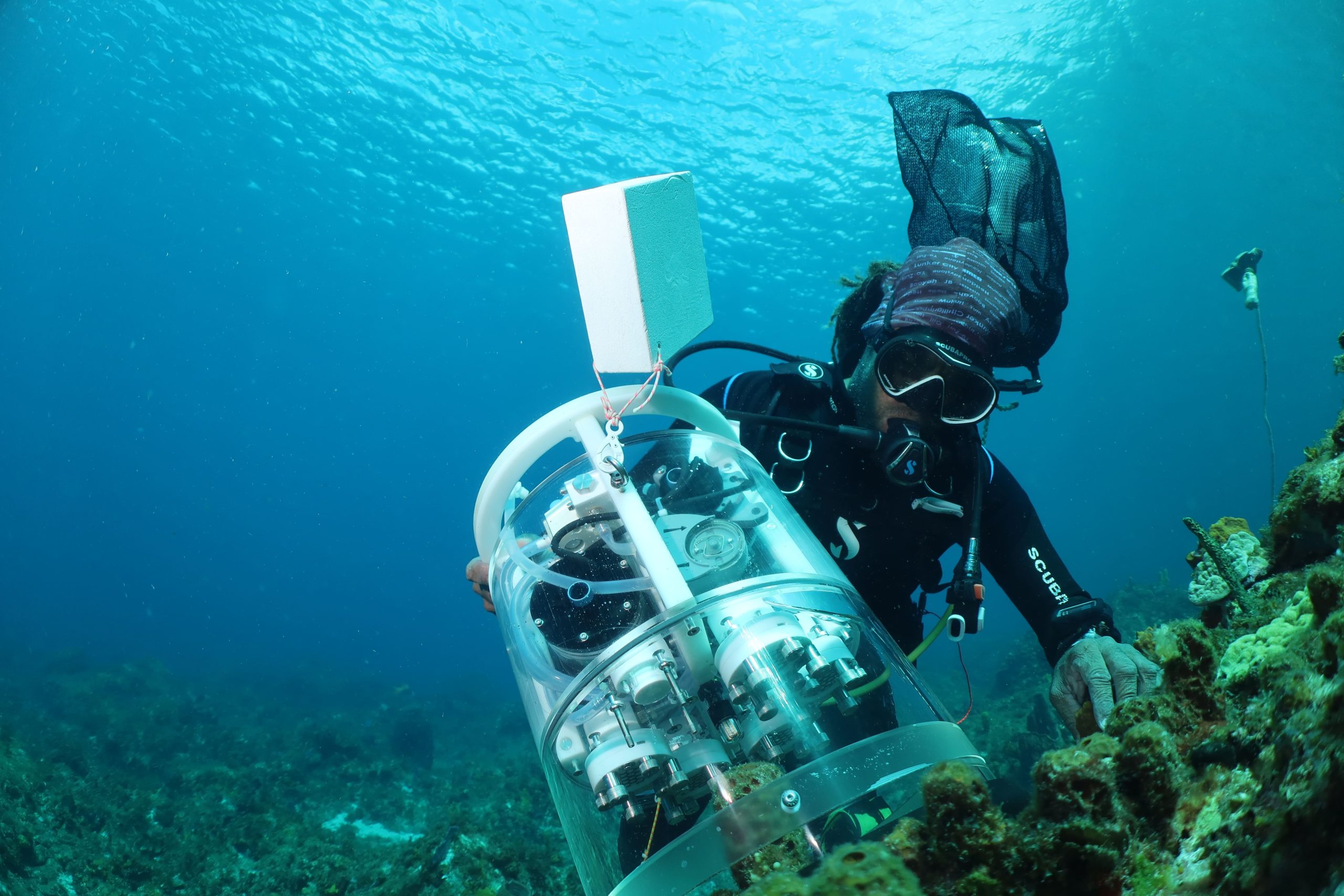
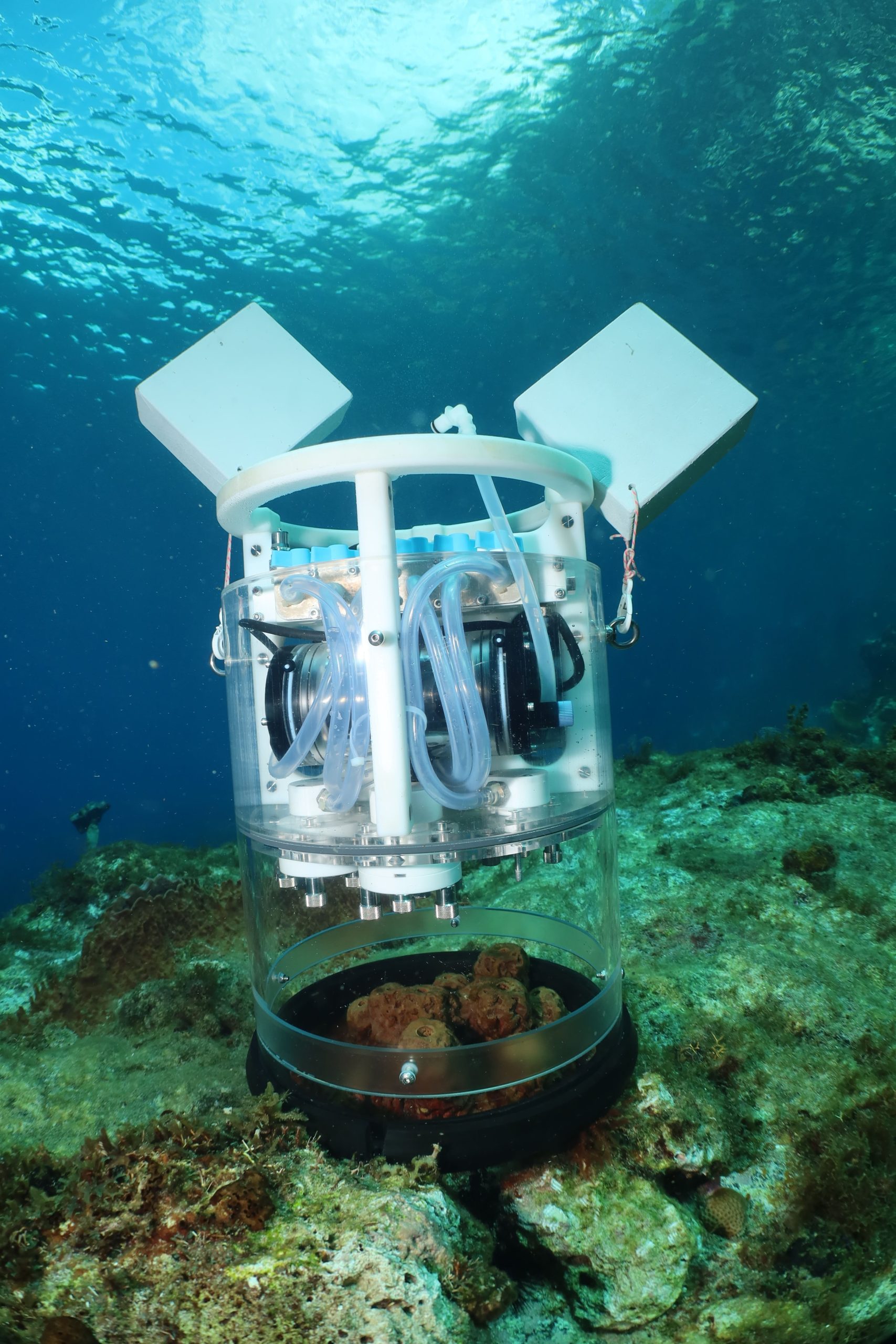
Capturing exo-metabolites from an Aplysina sponge with the I-SMEL device for metabolomic analysis. © Thierry Pérez
How many sponges were collected?
We had a collection permit for 200 samples and ended up collecting 182. The numbers still need to be finalized, but we expect around 150 species in total, including about twenty corals, and only 10 species that will not be used for genome sequencing.
Among roughly 120 sponge species (I had anticipated 80–100), several are new records for Martinique and the French Antilles, and we believe there are at least 10 species that are entirely new, all of which have already been identified to the genus level.
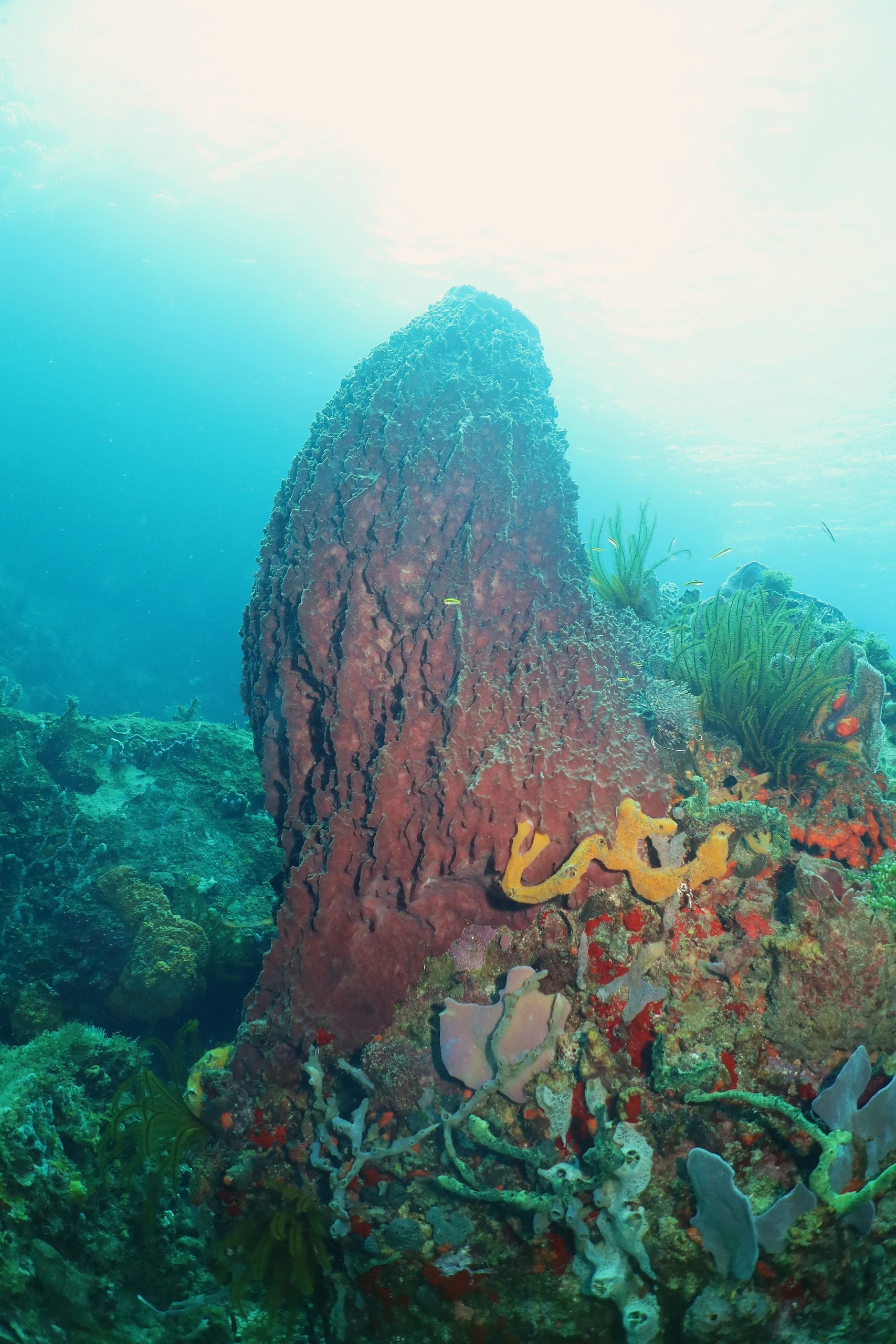
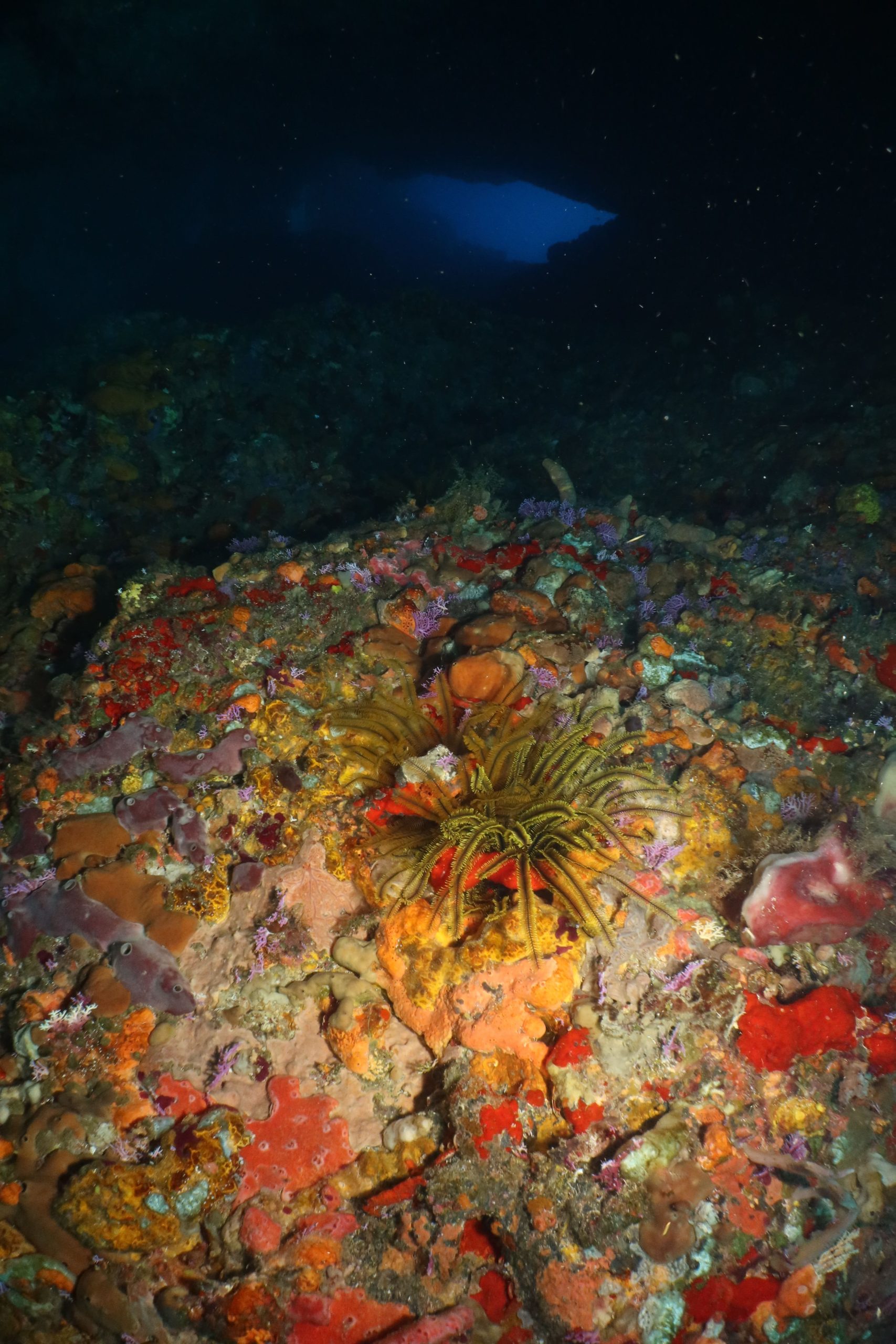
An exceptionally rich assemblage of sponges observed in the Rocher du Diamant fault. © Thierry Pérez

During the mission, Aplysina sponges were specifically targeted for genome sequencing as well as metabolomic analyses at Grande Anse, Anses d’Arlet.© Thierry Pérez
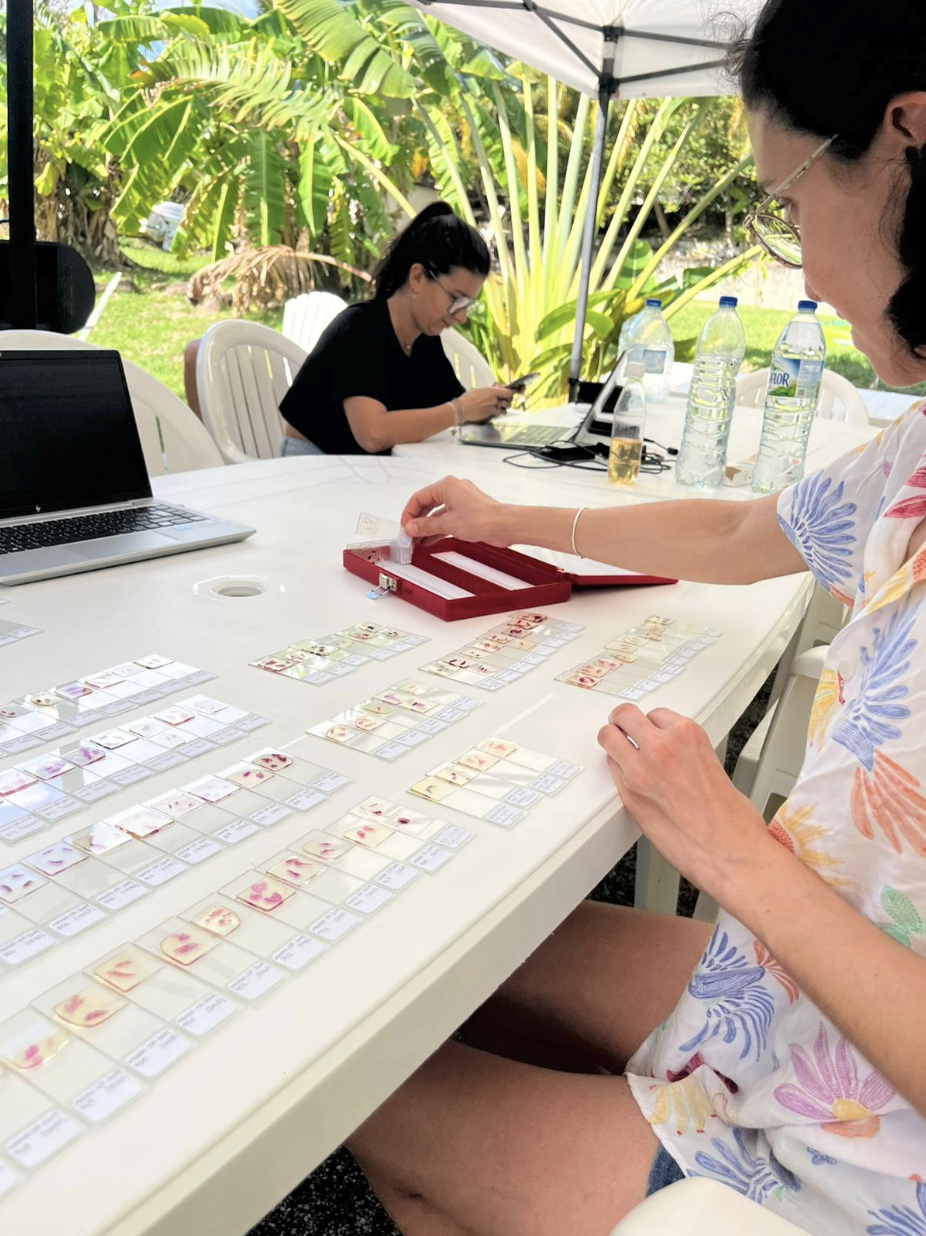
Sorting and organizing all the microscope slides prepared for sponge taxonomic identification. © Julie Poulain
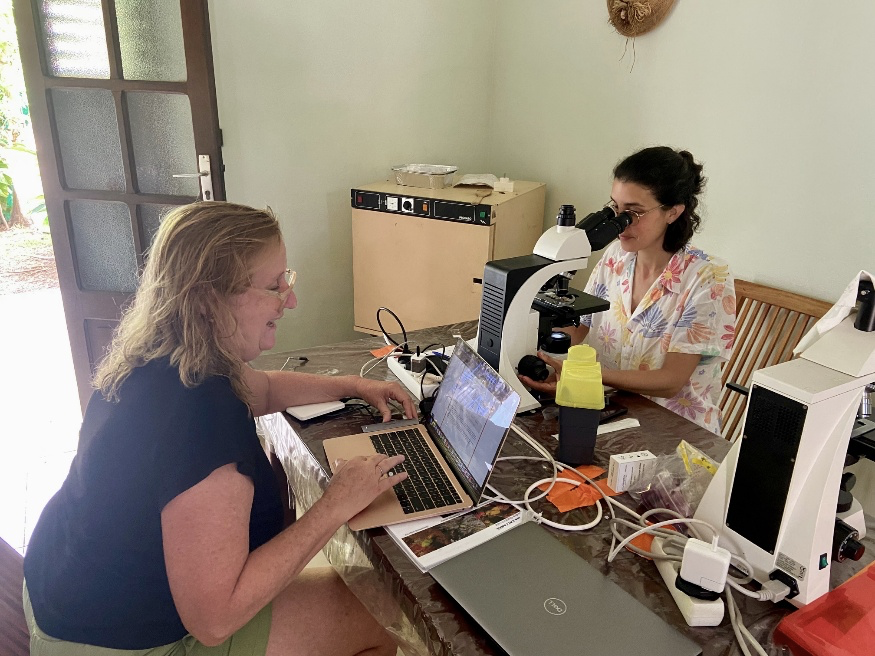
Taxonomic analysis, conducted by Cristina Diaz and Marie Grenier. (Postdoc at Aix-Marseille Université). © Thierry Pérez