
On Wednesday, March 25, 2026, the ATLASea leadership team will visit Plouzané, near Brest, at the Ifremer Brittany Center and host a conference (in french) dedicated to the first results of ATLASea, from 1:30 p.m. to 5:00 p.m.
Hugues Roest Crollius and Patrick Wincker, co-directors of the program, will open the conference by presenting the main results achieved by the PEPR ATLASea after three years of activity, as well as the associated scientific and technological perspectives.
This will be followed by a presentation by Jérémie Le Luyer, a research scientist at Ifremer within the LEMAR laboratory, whose work focuses on evolutionary physiology approaches with a strong genomics component.
Biotechnology startups Immunrise Biocontrol and Perha Pharmaceuticals will also take part in the event and will present examples of potential applications derived from the use of genomic resources.
This event represents an important milestone for the scientific and industrial community engaged in marine genomics. It will bring together stakeholders from both the public and private sectors to discuss the challenges related to marine biodiversity and sequencing technologies, while fostering the co-development of new approaches to innovation.
This conference is free and open to everyone. Registration is mandatory. (deadline march 20). Attendance is possible either in person or via videoconference (the connection link will be sent after registration).
Program
1:30 – 1:45 p.m.
Welcome: Laubier Amphitheatre, Ifremer Brittany Center, Plouzané
1:45 – 2:30 p.m.
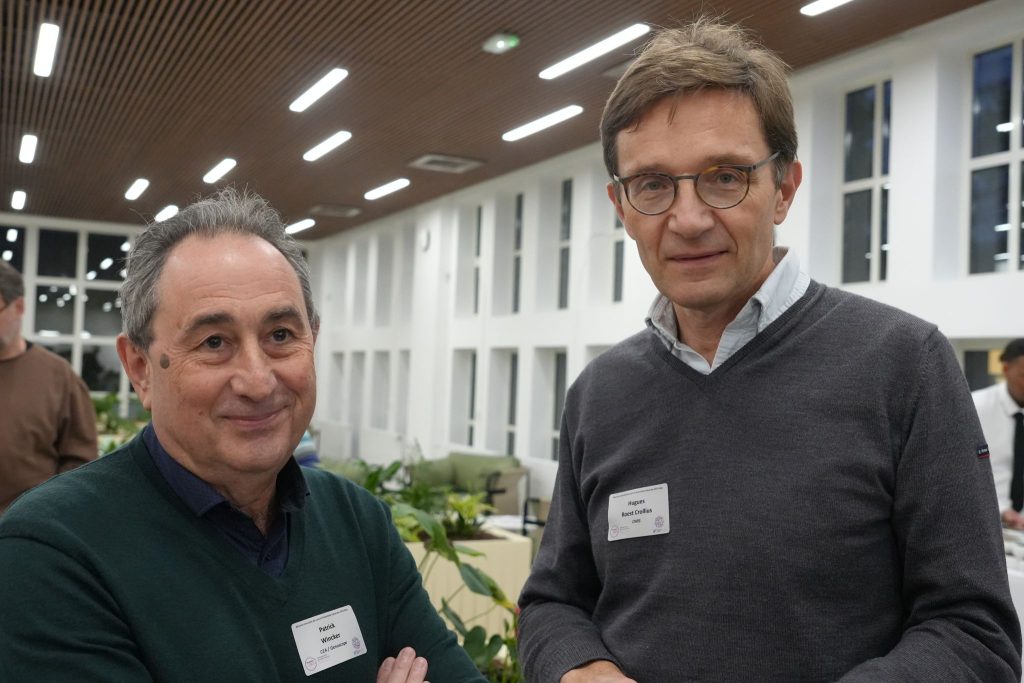
Patrick Wincker and Hugues Roest Crollius, co-directors of the PEPR ATLASea
ATLASea: Large-scale sequencing of marine genomes from the French EEZ
The ATLASea Priority Research Programme and Equipment (PEPR) was launched in 2023 with funding from the France 2030 initiative. Its ambition is to sequence the genomes of 4,500 species from the French Exclusive Economic Zone (EEZ), the second largest in the world. The programme builds on the expertise of CNRS and CEA in genetics, bioinformatics, and sequencing, in collaboration with partners including Ifremer, the Muséum National d’Histoire Naturelle, and several Universities. With more than 2,300 species collected and nearly 250 genomes produced, a largely deployed informatics infrastructure, and several analysis projects underway, ATLASea is now entering a phase that is particularly conducive to collaborations with stakeholders from the blue economy. Such collaborations may include, for example, the sequencing of species of interest or training in genomic analysis tools.
2:30 – 3:10 p.m.
Jérémie Le Luyer, Research Scientist at Ifremer, LEMAR Laboratory
Chemical communication and genomics: Linking evolution to marine ecosystem function
Chemical landscapes are mosaics of signaling molecules produced by organisms and their microbial partners that regulate intra- and interspecific interactions in marine ecosystems. They orchestrate key life-history stages, from development and metamorphosis to symbiosis and population structuring, yet remain largely unexplored despite being vulnerable to anthropogenic pressures and global change. At the molecular level, genes and pathways involved in the biosynthesis and perception of these signals exhibit a distinctive evolutionary pattern: strong conservation that ensures robust regulation of essential functions, coupled with rapid diversification among species that generates specific chemical cues shaping ecological interactions and reproductive isolation. Combining large-scale genomics (ATLASea) with chemical and experimental approaches offers a powerful framework to connect the evolution of signaling systems with community assembly and marine ecosystem functioning.
3:10 – 3:40 p.m.
Coffee Break
3:40 – 4:20 p.m.
Maéna Lorenzo, Laboratory Technician at Immunrise Biocontrol
Activities and potential uses of amphidinols: focus on plant protection and wine preservation
ImmunRise has established a collection of diverse marine microalgae and bacteria and screened extracts from these microorganisms for antifungal activity. In 2016, Amphidinium carterae, a microalga capable of inhibiting the growth of a broad spectrum of plant-pathogenic fungi and oomycetes, was identified. This activity is attributed to bioactive compounds produced by the microalga, known as amphidinols. Ongoing R&D efforts aimed at optimizing the production, purification, and formulation of these molecules have enabled the development of novel antifungal solutions for plant protection and food applications. These developments and their potential applications will be presented at this conference.
4:20 – 5:00 p.m.
Laurent Meijer, president of Perha Pharmaceuticals
“From Sea to Pharmacy”: Marine organisms, a rich source of therapeutic drugs, biological reagents, and experimental models for fundamental biology. The importance of genome sequencing.